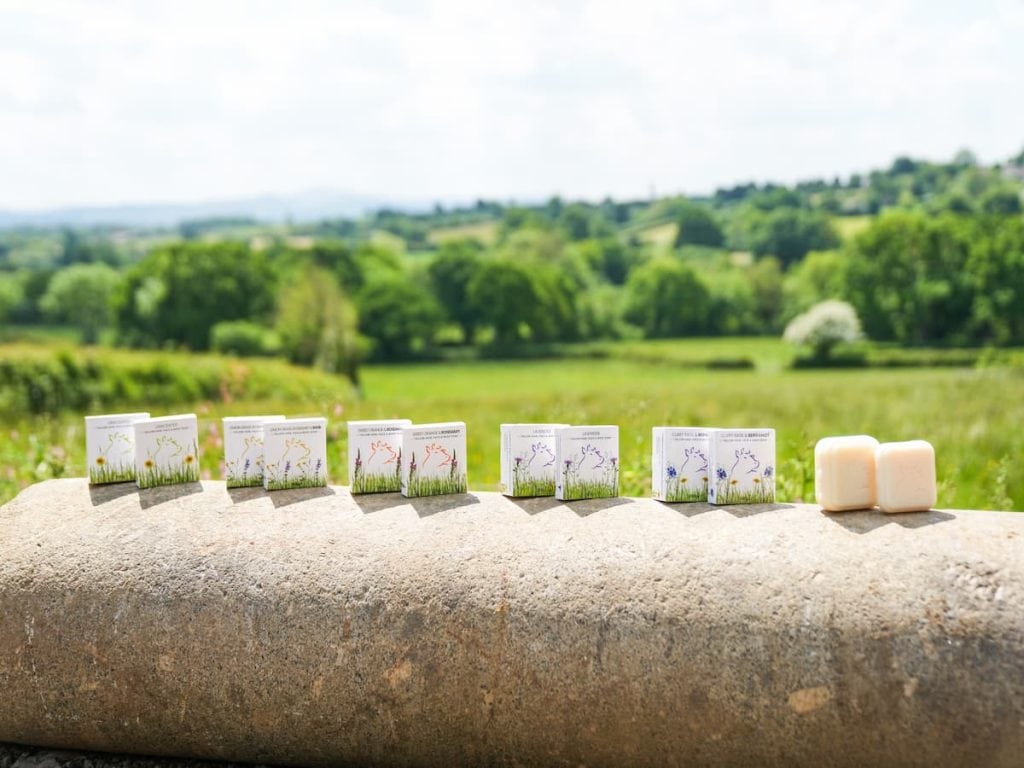
Whether you are washing your hands, cleansing your face, showering or washing your hair, a soap bar should be straightforward to use.
Hayes Meadow tallow soap is made on our farm in West Devon using a traditional cold-process method. Made with over 85% tallow, alongside castor oil and kaolin clay, it is developed for everyday washing of hands, face, body and hair.
This guide explains how to use it, what to expect from lather and rinsing, and where your own water conditions and washing routine may make a difference.
How to use it for everyday washing
Wet the soap and the area you are washing. Work up a lather with water, apply it, then rinse thoroughly.
For hands, work the lather over your palms, the backs of your hands and between your fingers before rinsing.
For face and body washing, start with a modest amount and add more if needed. Rinse thoroughly after washing.
If you use balm afterwards, our everyday face-care and working-hands guides explain how it can fit into your wider routine.
What should you expect from the lather?
Our soap produces a creamy lather. The amount of water, the amount of soap and how you work them together affect the washing experience.
Focus on spreading the lather over the area you are washing, then rinsing it away thoroughly. You do not need to keep adding soap simply to create more foam.
If washing or rinsing feels different from what you expected, consider your water conditions as well as the amount you are using.
Can you use it on your hair?
Hayes Meadow tallow soap is intended for hair washing as well as hands, face and body.
Wet your hair thoroughly, work up a lather with water, apply it to your hair and scalp, then rinse thoroughly.
Hair length, texture, your usual routine and water conditions can affect the experience. Start with a modest amount of soap and pay attention to how your hair feels after rinsing and drying.
Conditioner can remain part of your routine if you find it useful. A multi-purpose bar does not mean everyone will need exactly the same hair-care routine.
What if you have hard water?
Hard water is a feature of your water supply and can affect washing with a range of products, including traditional soap.
If lathering or rinsing is difficult, consider your water conditions. Start with a modest amount of soap and rinse thoroughly, rather than repeatedly adding more. For hair washing, conditioner may still be useful.
What makes our soap different?
Tallow is the foundation of our recipe. Our soap is made with over 85% tallow, with supporting ingredients chosen for the finished cleansing bar.
The high tallow proportion helps the bar hold together during use. Changes in humidity at home can sometimes cause cracks to appear, but the bar generally remains intact and usable.
We make the bars in individual moulds using a cold-process method. Every batch completes a six-week cure before it is offered for sale.
From preparing the tallow to making the finished bars, this work takes place on our farm in West Devon.
Choosing a scent
If you know your skin reacts to fragrance or essential oils, unscented is the simplest place to start.
Individual sensitivities vary, so unscented does not guarantee suitability. Check the ingredients of the particular variant you are considering.
Looking after your bar
For drying between uses, storage and changes in firmness over time, see our Tallow Skincare Aftercare & Storage guide.
Related guidance
Whether you are washing your hands, cleansing your face, showering or washing your hair, a soap bar should be straightforward to use.
Hayes Meadow tallow soap is made on our farm in West Devon using a traditional cold-process method. Made with over 85% tallow, alongside castor oil and kaolin clay, it is developed for everyday washing of hands, face, body and hair.
This guide explains how to use it, what to expect from lather and rinsing, and where your own water conditions and washing routine may make a difference.
How to use it for everyday washing
Wet the soap and the area you are washing. Work up a lather with water, apply it, then rinse thoroughly.
For hands, work the lather over your palms, the backs of your hands and between your fingers before rinsing.
For face and body washing, start with a modest amount and add more if needed. Rinse thoroughly after washing.
If you use balm afterwards, our everyday face-care and working-hands guides explain how it can fit into your wider routine.
What should you expect from the lather?
Our soap produces a creamy lather. The amount of water, the amount of soap and how you work them together affect the washing experience.
Focus on spreading the lather over the area you are washing, then rinsing it away thoroughly. You do not need to keep adding soap simply to create more foam.
If washing or rinsing feels different from what you expected, consider your water conditions as well as the amount you are using.
Can you use it on your hair?
Hayes Meadow tallow soap is intended for hair washing as well as hands, face and body.
Wet your hair thoroughly, work up a lather with water, apply it to your hair and scalp, then rinse thoroughly.
Hair length, texture, your usual routine and water conditions can affect the experience. Start with a modest amount of soap and pay attention to how your hair feels after rinsing and drying.
Conditioner can remain part of your routine if you find it useful. A multi-purpose bar does not mean everyone will need exactly the same hair-care routine.
What if you have hard water?
Hard water is a feature of your water supply and can affect washing with a range of products, including traditional soap.
If lathering or rinsing is difficult, consider your water conditions. Start with a modest amount of soap and rinse thoroughly, rather than repeatedly adding more. For hair washing, conditioner may still be useful.
What makes our soap different?
Tallow is the foundation of our recipe. Our soap is made with over 85% tallow, with supporting ingredients chosen for the finished cleansing bar.
The high tallow proportion helps the bar hold together during use. Changes in humidity at home can sometimes cause cracks to appear, but the bar generally remains intact and usable.
We make the bars in individual moulds using a cold-process method. Every batch completes a six-week cure before it is offered for sale.
From preparing the tallow to making the finished bars, this work takes place on our farm in West Devon.
Choosing a scent
If you know your skin reacts to fragrance or essential oils, unscented is the simplest place to start.
Individual sensitivities vary, so unscented does not guarantee suitability. Check the ingredients of the particular variant you are considering.
Looking after your bar
For drying between uses, storage and changes in firmness over time, see our Tallow Skincare Aftercare & Storage guide.

No Comments yet!